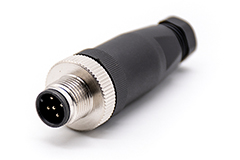
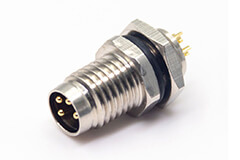
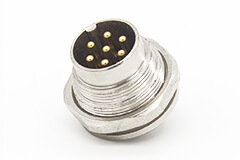
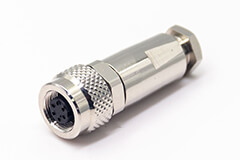
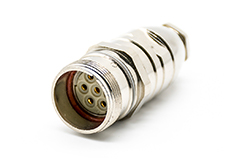
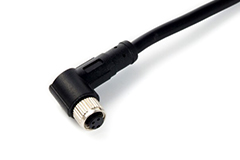
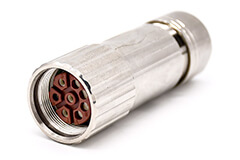
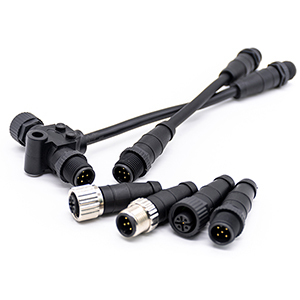
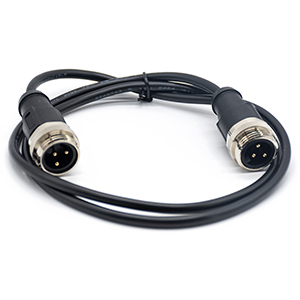
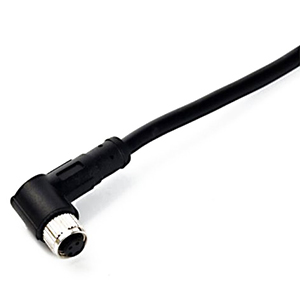
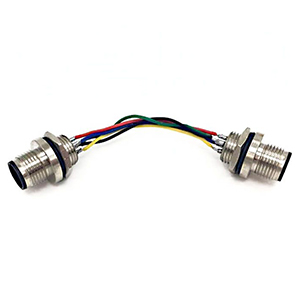
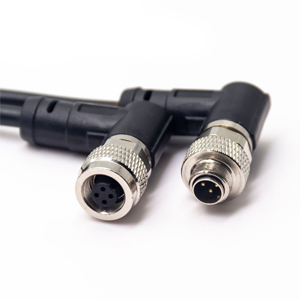
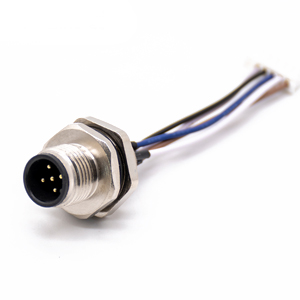
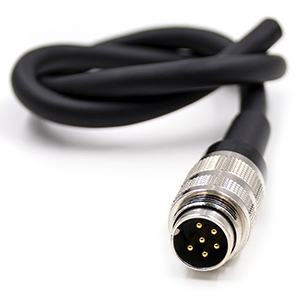
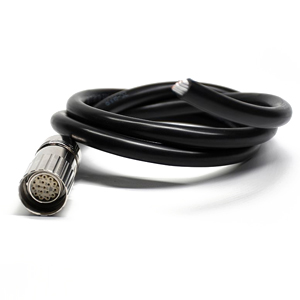
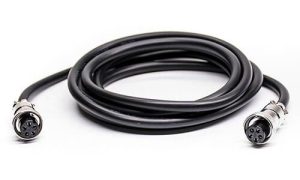
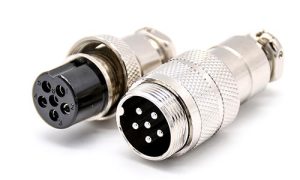
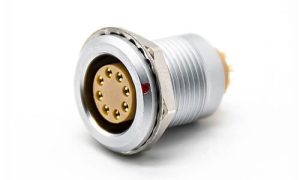
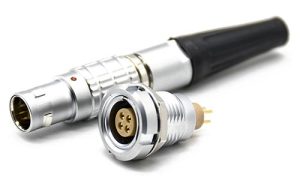
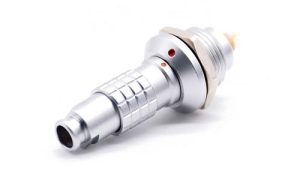
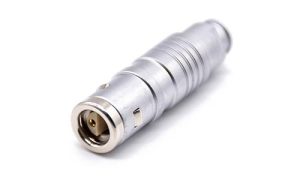
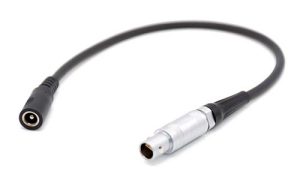
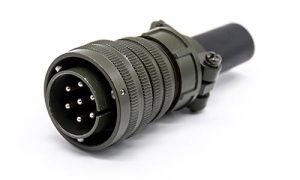
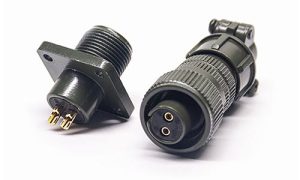
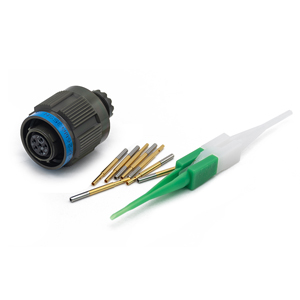
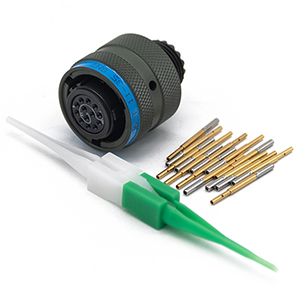
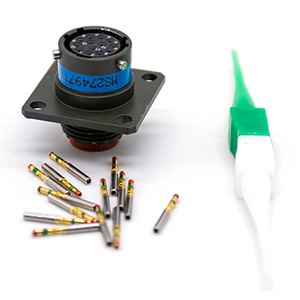
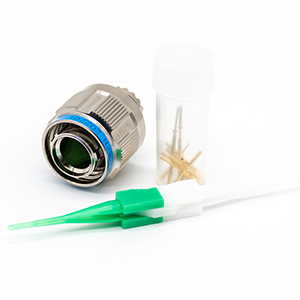
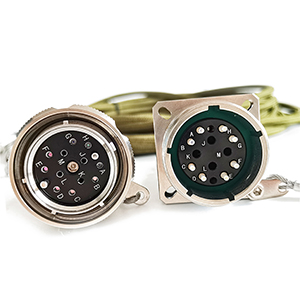
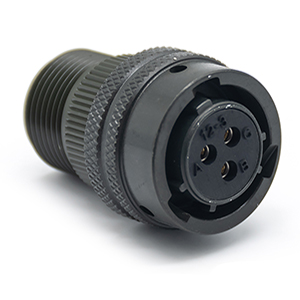
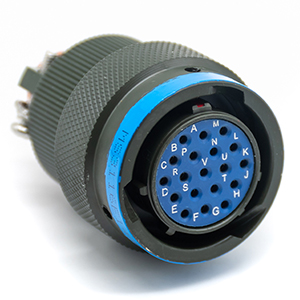
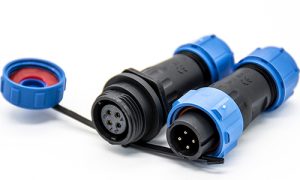
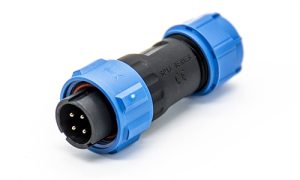
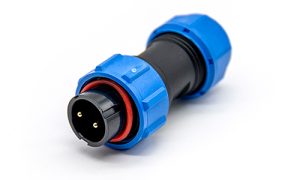
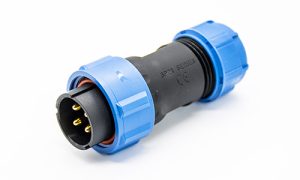
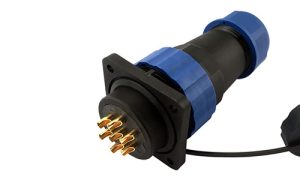
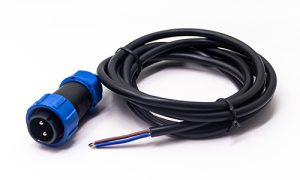
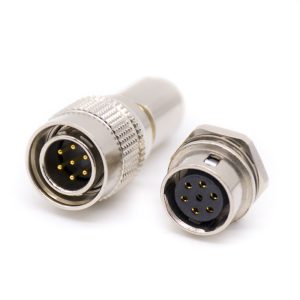
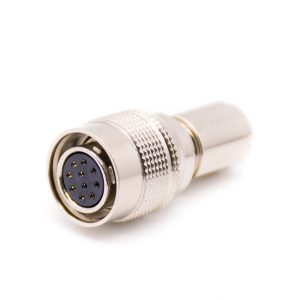
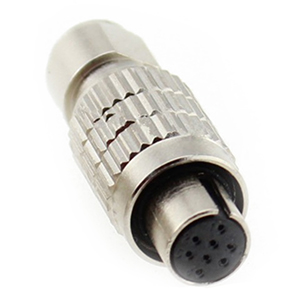
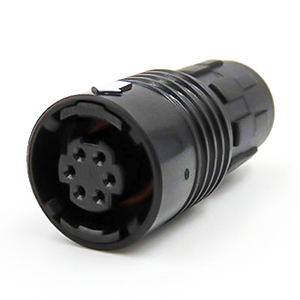
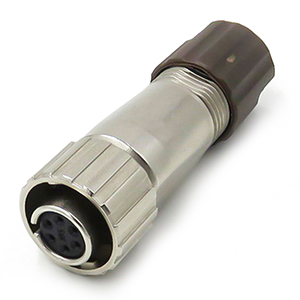
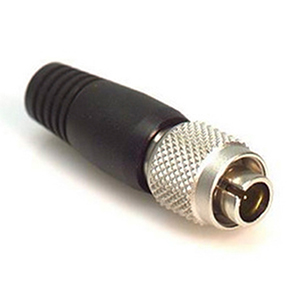
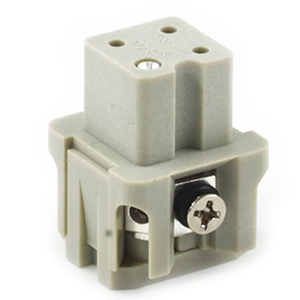
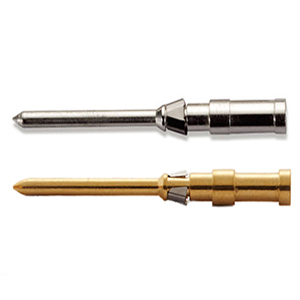
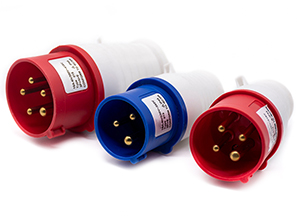
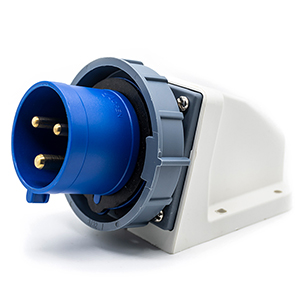
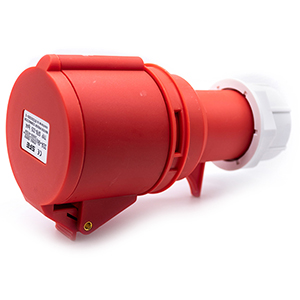
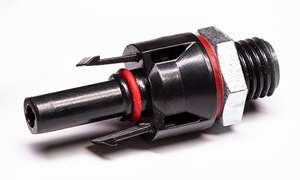
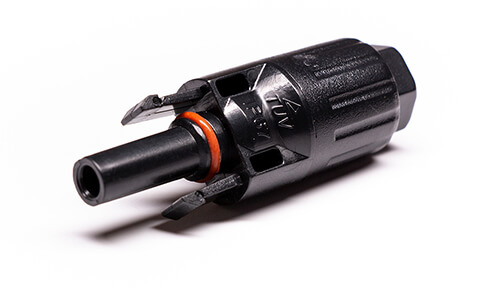
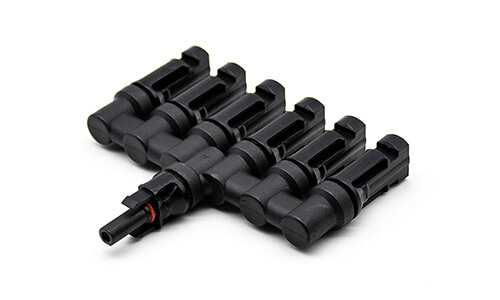
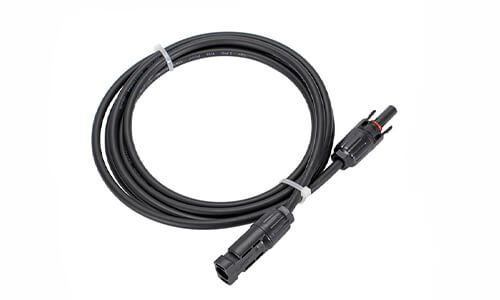
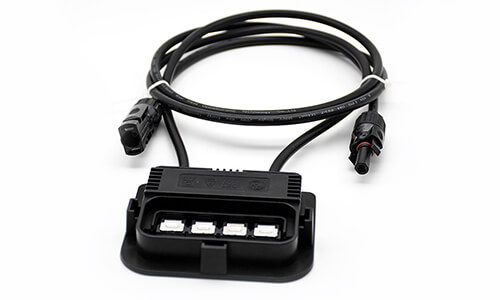
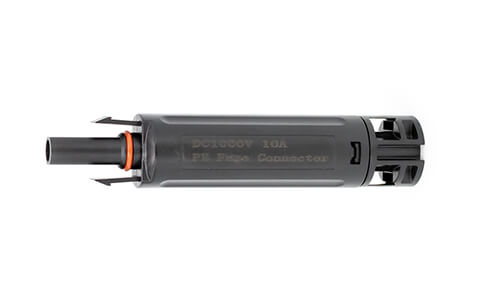
M Series Connectors
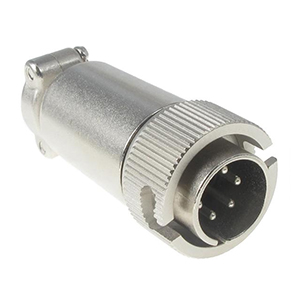
Are lightweight triplestart ratchet coupling type connectors designed for avionics, aerospace, Harsh Environment Connectors, security, motorsport and heavy duty applications.

Temporary power distribution in heavy-duty industrial applications—such as mobile generator deployment, emergency backup infrastructure, data center commissioning, and large-scale entertainment logistics—presents rigorous electrical and mechanical challenges. Transmitting continuous currents ranging from 150 Amps to 400 Amps requires electrical terminations that minimize both voltage drop and localized thermal generation. In these environments, operating conditions are often severe, exposing electrical joints to physical vibration, ambient temperature fluctuations, and environmental contaminants. Maintaining a stable, low-resistance connection is critical to preventing equipment damage and ensuring operational uptime.
Traditional hardwiring methods, which rely on bolted mechanical lugs and manual busbar terminal fastening, introduce significant operational constraints in modern industrial field setups. These legacy practices demand extensive mechanical tools, prolong deployment schedules, and increase the statistical risk of human error during torque application. Furthermore, repeated bolting and unbolting accelerate thread wear on expensive switchgear and expose technicians to exposed live conductors if safety interlocks fail.
The engineering bottleneck resides in balancing rapid deployment with strict regulatory safety compliance (such as National Electrical Code or NEMA standards). Under high-current operational stress, inadequate termination torque can lead to localized contact resistance escalation, culminating in rapid thermal runaway or catastrophic dielectric breakdown. The industry-wide evolution toward single-pole cam-type connection systems addresses these pain points by replacing hardwired lugs with pre-insulated, high-pressure mating interfaces. This design paradigm optimizes field setup efficiency, allowing quick connection and disconnection without compromising technical safety factors under a 600V continuous load rating.
An industrial electrical camlock connector (commonly known as a “rhino plug” in specific regional markets) is a heavy-duty, single-pole power interconnect engineered to handle the safe and rapid transmission of high-amperage low-voltage electricity. Unlike multi-pin industrial plugs that house multiple phases within a single molded housing, a camlock system utilizes individual single-conductor connectors for each line, neutral, or ground phase.
Based on established manufacturing specifications, the technical parameters of these heavy-duty single-pole configurations include:
In industrial procurement and automated Bill of Materials (BOM) processing, a critical distinction must be maintained between electrical camlock connectors and fluid camlock couplings. While they share similar descriptive terminology, their engineering functions, material requirements, and regulatory standards are entirely independent.

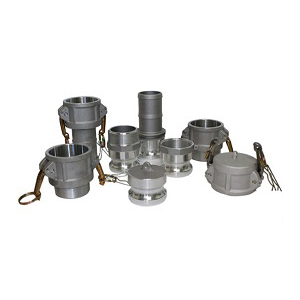
The comprehensive breakdown below illustrates the technical divergence between these two categories:
| Engineering Parameter | Industrial Electrical Camlock Connectors | Fluid Camlock Couplings |
|---|---|---|
| Primary Medium | Electrical energy (AC/DC current up to 600V) | Liquids, gases, chemicals, slurries, or dry powders |
| Core Function | High-amperage rapid power transmission (150A – 400A) | Leak-proof transfer of fluids or pressure-driven materials |
| Locking Mechanism | Internal overlapping rotational cam profile; locked by inserting and rotating 1/3 turn | External heavy-duty cam arms (lever locks) that compress an elastomeric gasket |
| Contact Assembly | Solid high-conductivity copper alloy or brass contact pins and sleeves | Hollow metal or plastic bored couplings with internal sealing rings |
| Insulation & Housing | High-grade Polyamide 66 (PA66) flame-retardant engineering thermoplastics | Stainless steel, aluminum, brass, or polypropylene (no dielectric required) |
| Procurement Classification | Categorized under electrical components / power interconnects | Categorized under fluid power, piping, or hose fittings |
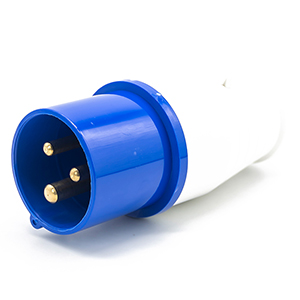
The camlock plug is the male connector. It is typically installed on the cable end and inserted into a compatible socket.
Main characteristics:
150A Camlock Male Plug Single Pole Industrial Power Connector IP44 Cable Mount
200A High-power Camlock Male Plug Single Contact IP44 for Harsh Environments
400A Industrial Camlock Connector Male High-current Plug 600V PA66 Material
The camlock socket is the female connector. It is usually mounted on:
Main characteristics:
400A Industrial Camlock Connector Male High-current Plug 600V PA66 Material
200A Female Socket Flange Panel Mount Camlock Connector High-power Single Pole
400A High-current Camlock Female Socket Flange Mount IP44 Power Distribution Socket
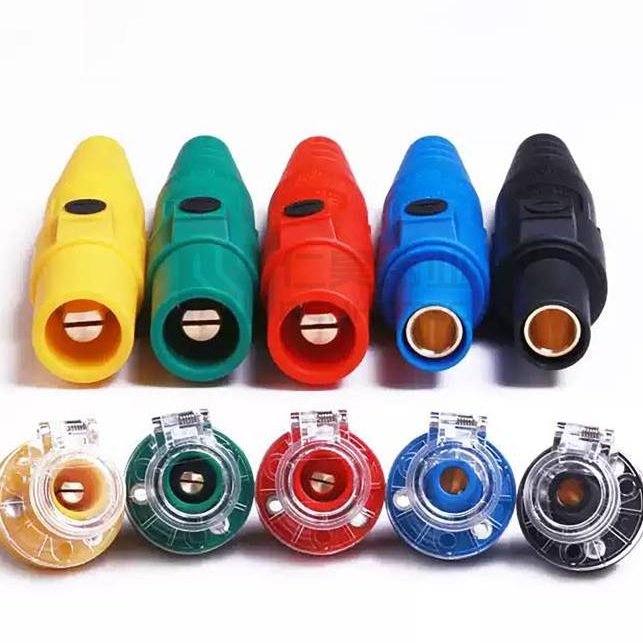
| Feature | Camlock Plug | Camlock Socket |
|---|---|---|
| Connector Type | Male | Female |
| Installation | Cable end | Panel/equipment |
| Primary Function | Inserts into socket | Receives plug |
| Typical Use | Portable cables | Fixed systems |
Both components are essential for a complete temporary power connection system.
Environmental sealing and dielectric isolation are sustained by the formulation of the external insulating sleeve. While legacy industry components often utilize soft rubber or standard elastomers, advanced power camlock connectors employ Polyamide 66 (PA66) modified engineering thermoplastics.
PA66 provides superior technical advantages over common rubber variants:
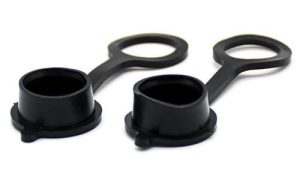
To supplement this material barrier, protective dust caps are deployed during non-operational phases. These caps seal the exposed metal contacts against dust, moisture, and particulate ingress, ensuring the system maintains its IP44 environmental protection rating. This ingress resistance keeps the internal contact interfaces clear of film-forming contamination, safeguarding subsequent electrical connections against tracking faults and ensuring absolute shock-proof safety.
Power camlock connectors are designed for simple and secure operation.
The connection process typically involves four steps:
The plug is aligned with the socket.
The plug is pushed into the socket.
The plug is rotated to activate the cam-locking mechanism.
The internal conductive surfaces engage, establishing a secure electrical connection. To disconnect, the process is reversed.
This quick-lock design allows technicians to make connections efficiently while minimizing installation time.
Modern heavy-duty power distribution demands components that eliminate downtime and guarantee operator safety. Our focused line of single-pole camlock connectors delivers high-tier performance through optimized engineering layout:
To simplify your Bill of Materials (BOM) matching, power camlock connectors are categorized into three core engineering dimensions:
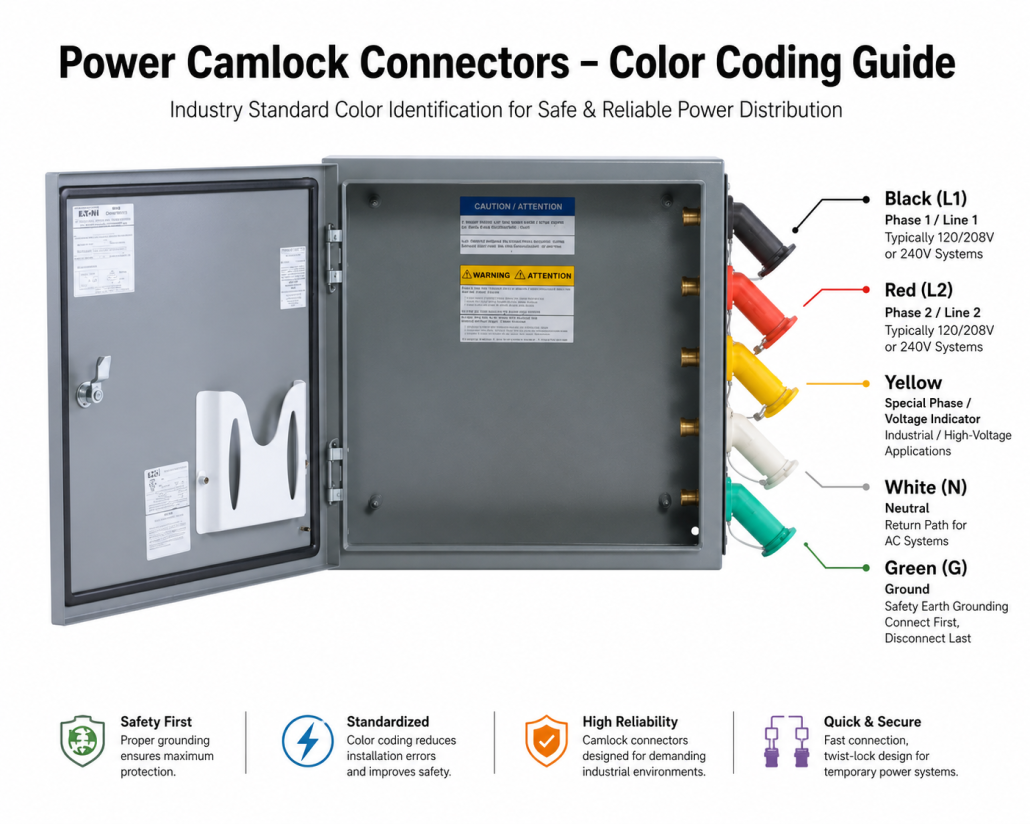
In high-current distribution, visual identification is the first line of defense against catastrophic phase-mismating. Standardized color coding ensures electrical contractors and site technicians instantly identify ground, neutral, and live phases under NEMA and international specifications.
Below is the standard configuration for our 150A – 400A single-pole camlock series:
Using this strict color-coding system eliminates guessing during rapid site deployments, significantly reducing the risk of short circuits or equipment failure.
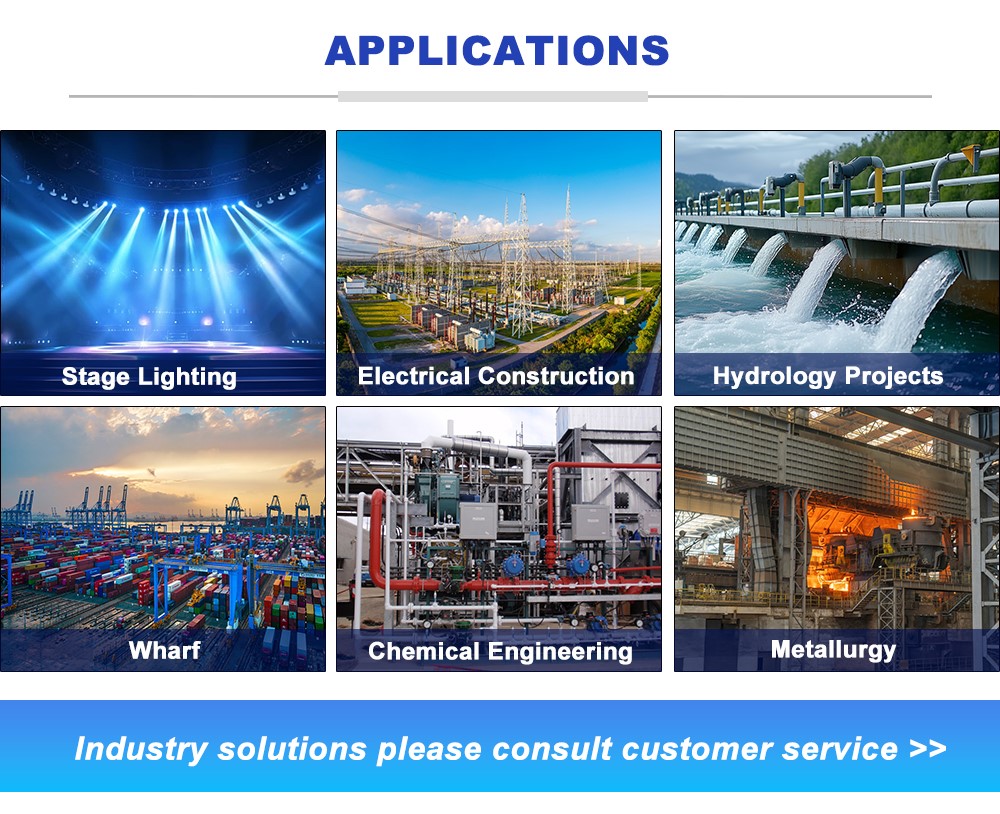
Our rugged PA66-housed, copper-alloy contact camlock connectors are optimized for heavy-duty environments requiring safe, temporary, and repeatable electrical connections:
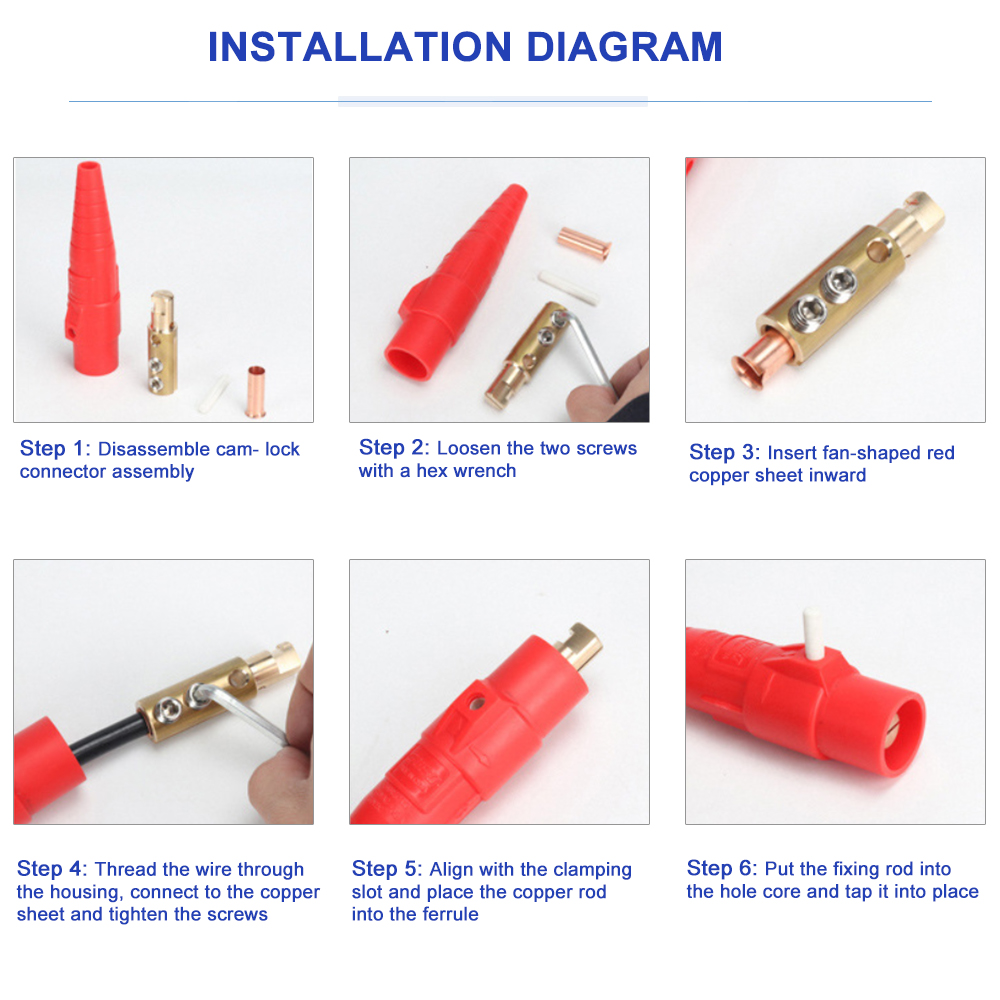
Power camlock connectors are designed for fast field assembly and reliable cable termination.
Proper installation is essential to ensure secure electrical contact, minimize resistance, and maintain long-term operational safety.
The following step-by-step process demonstrates a typical set-screw style camlock plug installation.
To ensure perfect compatibility with your existing power systems and electrical cables, follow this quick engineering checklist before placing your order:
Need precise technical drawings, step-by-step installation guides, or bulk wholesale pricing for your upcoming commercial project? Our application engineering team is ready to assist.
Quick technical answers for industrial procurement managers and engineers.
A: All our 150A, 200A, and 400A camlock plugs and sockets are strictly rated for a maximum of 600V AC/DC continuous operation under standard industrial loads.
A: Polyamide 66 (PA66) provides significantly higher impact resistance (resists heavy site vehicle crushing), superior flame retardancy, and outstanding chemical immunity to oil, fuels, and industrial acids compared to legacy rubber boots.
A: No. Our camlock series utilizes a heavy-duty dual set-screw termination design. You only need standard hex tools to tighten the high-torque screws directly onto bare copper wire strands, delivering maximum tensile pull-out resistance without hydraulic crimpers.
A: They are rated at IP44, protecting the internal copper alloy contact interfaces against solid foreign objects larger than 1.0mm and water splashing from any direction. Note: For severe rain environments, protective caps should be engaged when unmated.

As a Product Manager at Renhotec Group (est. 2008), I specialize in providing deep technical insights into connectors, cables, and custom electronic components. Renhotec is a global leader in interconnect solutions, dedicated to manufacturing high-standard products for diverse industries as your trusted technical partner.